
Licensed, not just careful
JKM taska registration P/TI 004/2022 and SSM 0230517-X. Fire, hygiene and ratio standards are inspected, and we keep the paperwork where parents can see it.
Childcare Penang at RightStart is owner led, JKM registered, and built around one child at a time rather than one syllabus for the room.
RightStart is a family-run, JKM-registered early-childhood group in Penang. We write a learning plan for every child, keep groups small enough to see each one, and carry that relationship from the taska room at 18 months to the last day before Standard One.
Our approach
Every child arrives with a different map. One is talking in full sentences but cannot hold a pencil. Another counts to fifty and still cries at drop off. A syllabus cannot tell them apart, so we do not rely on one alone.
Each term we write down where your child is, what comes next, and how we will get there. You get that page, in plain language, and we talk it through.
What this looks like in practice
JKM taska registration P/TI 004/2022 and SSM 0230517-X. Fire, hygiene and ratio standards are inspected, and we keep the paperwork where parents can see it.
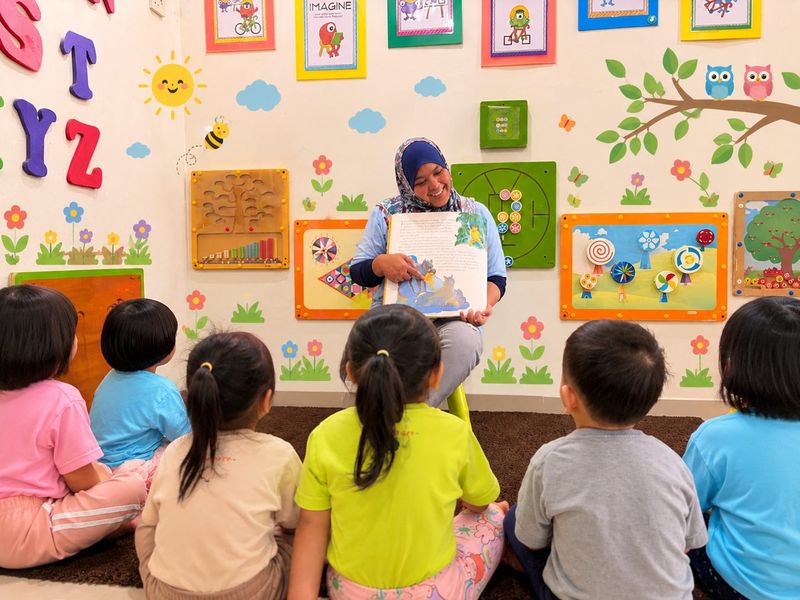
We cap each group so a teacher can name what every child did today without checking a list.
English-led, with daily Bahasa Malaysia and Mandarin. No child is ever shamed for reaching for their home language.
Freshly prepared meals and snacks on site, with allergies and family dietary needs recorded before day one.
Our story
RightStart began as one room in Bayan Lepas in 2009, because the founders could not find what they wanted for their own children: a place that would be honest with them and patient with a child who needed a different pace. Audrey has been in early childhood since 2005, two decades in the field. RightStart has run since 2009, which is 17 years.
Five centres later, the test is the same. If we would not leave our own child in that room on a Monday morning, it does not open.
Our founder
Short interviews with our founder. The answers are what she says. Watch all of the interviews.
In our founder's own words.
I started a daycare centre in the first place because, back then, what was missing in Penang was a true balance between emotional development and academic readiness.
Subscribe to RightStart Children on YouTube
I started a daycare centre in the first place because, back then, what was missing in Penang was a true balance between emotional development and academic readiness. At the time, early education was dominated by rigid, traditional academic drilling, where children are expected to sit still with worksheets for hours.
There wasn't a place that truly prioritised emotional intelligence, character and individual child development alongside learning. I wanted to build a sanctuary in Penang where children could feel secure, express themselves and discover a genuine love for learning.
In our founder's own words.
The centre was a modest, intimate space, but it was filled with so much heart and energy.
Subscribe to RightStart Children on YouTube
One timing phrase is left out. Two decades is Audrey's time in early childhood, since 2005. RightStart has run since 2009, which is 17 years.
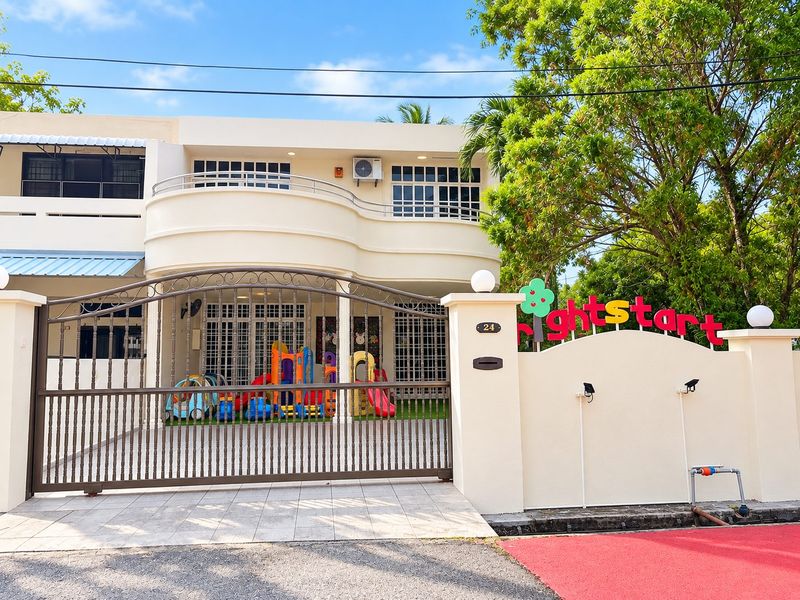
RightStart opened its doors over 17 years ago. The centre was a modest, intimate space, but it was filled with so much heart and energy. It started with just a handful of children, a small team of dedicated educators, and classrooms designed from top to bottom with warmth in mind.
I remember looking at those clean, bright spaces on day one, knowing that every corner had to feel safe, welcoming and inspiring for a young child. While we have expanded across five centres, that foundational feeling of a close-knit family environment has never changed.
In our founder's own words.
When we say 'Inspiring greatness, one child at a time', what that actually means in practice is that we do not believe in one-size-fits-all approach to education.
Subscribe to RightStart Children on YouTube
When we say 'Inspiring greatness, one child at a time', what that actually means in practice is that we do not believe in one-size-fits-all approach to education. Greatness isn't about fitting every child into the same mould or expecting uniform performance. It's about identifying each child's unique strengths, personality and pace, and nurturing their individual confidence.
In our classrooms, our teachers take time to observe every student, celebrating their individual micro wins daily, whether that's mastering a new vocabulary word, regulating a big emotion, or leading a group activity.
In our founder's own words.
I tell them that while traditional education teaches children what to learn, EQuip teaches them how to navigate their feelings, build resilience and connect with others.
Subscribe to RightStart Children on YouTube
When I explain our EQuip programme and emotional intelligence to a parent who has never heard of it, I tell them that while traditional education teaches children what to learn, EQuip teaches them how to navigate their feelings, build resilience and connect with others. Emotional intelligence is about helping a child identify when they feel frustrated, learn how to self-regulate and develop empathy for their peers.
Through EQuip alongside specialised modules in arts, science and literacy, we give children the social and emotional anchor they need so that they can thrive both in school and in life.
In our founder's own words.
We do not run to the rescue straight away in the first place.
Subscribe to RightStart Children on YouTube
Recently, I discovered there's this amazing research about emotion. Emotions actually will dissipate by itself within 90 seconds. So usually for people with very major emotional breakdown, depression, anxiety, because they do not let go of their emotions. They feed it too much, keep on telling people how they feel, thinking to themselves what makes them so anxious and all that.
And growing up, most of us are actually lack of emotional exposure. And there's this thing called emotional awareness whereby I find it's very important in children. So children who are not reacting to whatever is happening around them, actually it's lack of emotional awareness, And we have to really take this seriously.
And for children, parents would come to tell us, oh, my child cries, anxious, worried about spelling next day, scared of the teacher because teacher is too loud and all that. To me, research has shown we should actually allow the children to feel the emotions. We do not run to the rescue straight away in the first place.
Immediately, okay, you don't cry, and soothe the child because what they need to know now is they need to learn how to self-soothe. So if I'm sad from young, my daddy will come to me, oh, come, I'll bring you, Audrey, or you are my darling. Don't cry, settle everything for me and avoid me from feeling those negative emotions, then I will never be able to learn why I'm feeling this way.
And this will actually lead to a lot of social issues now, like for example, committing suicide at a very young age because they are missing of this thing called self-soothe. They can't soothe themselves, they can't talk themselves out of the emotions. So, for me, for us, just to share with you an experience that I have with this child. He would whine every morning, for sure.
He would cry and it happens, but he came to school very early in the morning. So it happens that one morning I was there before him. So he walked in and he wanted to start his whining. The teacher gave him his bottle, said, you go in and calm down. After you are calm, you come up. So usually, he will go into my office and face the wall, drink water, thinking, don't know what, then he'll go out.
The minute he saw me in the office, stop. Turn around, I'm ready to go to the class. So, this is what I want to see in the children. What is important right now? Is it your emotions or something else? But if we do not allow them to feel this, we try to solve problems for them. Don't worry, don't cry. I'll tell your teacher to give you a hundred marks, to give you three stars.
I'll tell your teacher to scold your friend or that. They should be the one telling the teacher, not us. They should be the one. And there's another thing that I feel which is very important to me now is my style is I don't update parents, even for the young ones. Why? Because I want the parents to see and feel for themselves the child's improvement, not from my mouth.
Because when we tell them, oh mommy, I'm doing this, I take photo while my child can write, but there's a video or a photo only at that point of time. But the child really knows enough. So when parents are fed with all this information, they will actually mistakenly think that the children can do, because the school is already teaching this. So I don't do that.
I want parents to feel for themselves, whether how much your child has improved. So even the young babies in my school, the first two weeks I'll update them, then they'll come and tell me, Audrey, I want daily updates. And no, my teacher will not bring the phone to the classroom because they will engage with the child 100%. Then how am I going to know whether my child is improving? I say, you ask them.
But she's a baby, she's a baby, she cannot talk. Make her talk. So eventually, most of the time, like 90% of the time, within a month or two, the parents tell me, amazing, my daughter can tell me what she's doing in school. I can literally see her improvement. This is what I feel is really very important, that it's an old school method.
Those days we go to school, the teacher don't come and tell our parents what we do in school. But a lot of young parents now feel that they need to know what they do in school. My advice is get the information from the child, not from the teachers.
About us
RightStart is family run and owner led. The people who set the standards are the people you will meet at the centre, not a head office in another state.
No. We are independent, which is why the programme can be adjusted for a single child without asking permission from a franchisor.
We tell you early, in specific terms, and we show you what we are doing about it. Where a child needs occupational therapy or a speech assessment, we say so rather than waiting for primary school to raise it.
They move up within RightStart, and the teachers hand over the plan in person. You do not start from scratch with strangers.
The honest way to judge a centre is to stand in it on a normal weekday. Pick a morning and we will keep it simple.